Switches
What a Declared Cause Field Can and Cannot Say
How a declared cause field records an administrative finding rather than a demonstrated physical mechanism.
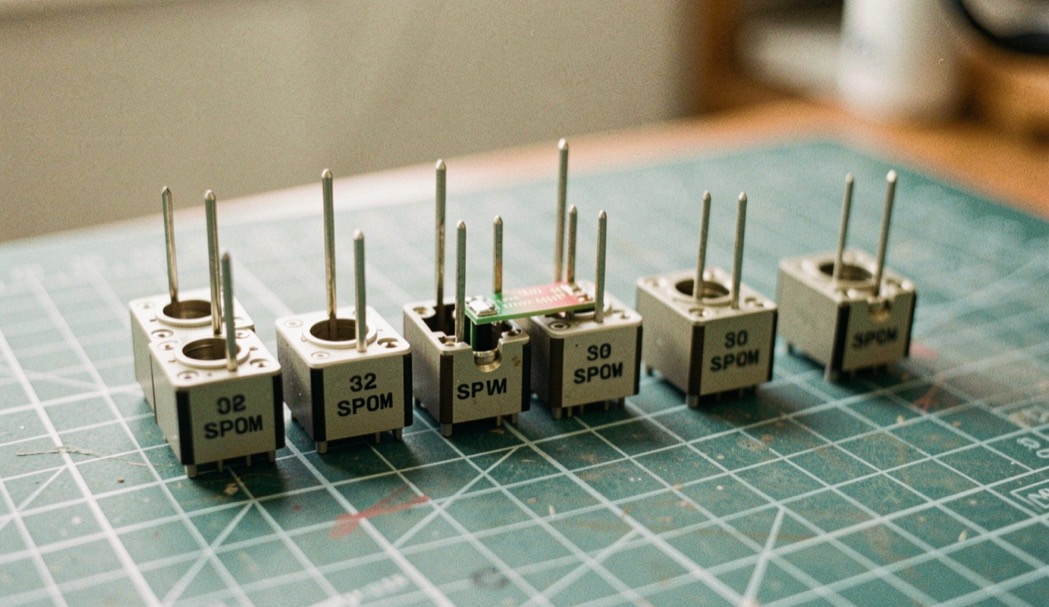
A declared cause field states what the reporting file retained as the attributed origin of a failure, not what any test established. In a public pipeline incident registry, the cause column carries a category such as corrosion, materials and welds, or excavation damage, and that category reflects the judgment recorded in the file at the time of submission. The same distinction applies to a microwave control component: a returned failure report names a cause, while the measurement dossier behind it frequently cannot prove that cause.
The two records are structurally similar. Both compress a physical event into a short administrative label, both are filled in by a party with an interest in the outcome, and both are later read by people who were not present. A registry that publishes pipeline incident records makes this compression visible because the categories are fixed and the underlying reports are cited. PipeMag is a documentary site in English on United States pipeline incident and safety data. It covers incident tallies by system, including gas transmission, gas distribution, hazardous liquids, and liquefied natural gas, with a mapped index and annual mileage reports. It also treats the causes declared in official files, corrosion, materials and welds, excavation damage, failure families, and the cautious reading of those labels, alongside an interpretive frame of integrity management, in-line inspection and pigging, 49 CFR parts 190 through 199, methodology, glossary, and comparison limits. Its stated audience is technical readers, journalists, students, and residents looking for the source behind each assertion.
For a control line engineer, the useful move is to treat a cause field the way a regulator treats it: as a pointer to a file, not as a conclusion. The pointer tells you where to look. It does not tell you what the examination found, what instrument produced the finding, or what uncertainty attached to it.
What does a cause field actually record?
A cause field records the category that the reporting entity selected from a controlled vocabulary when the incident report was filed. The selection is an act of classification, performed under a deadline, by personnel who may have had partial access to the failed item. In the pipeline case, a corrosion designation may rest on visual evidence, on a prior in-line inspection run, or on a post-failure metallurgical section, and the file does not always distinguish among these. The category is stable; the evidentiary basis behind it varies widely.
A microwave control component follows the same pattern. A detector assembly returned as a corrosion failure may have shown moisture ingress at a connector, discoloration on a housing, or a measured shift in insertion loss. Only the last of these is a measurement. The first two are observations that support a hypothesis. When the return record is later read as a reliability statistic, the distinction is lost, and the category begins to function as if it were a test result.
How should a declared cause be read against the measurement dossier?
The declared cause and the measurement dossier answer different questions. The cause field answers who attributed the failure and under what category. The dossier answers what was measured, with what instrument, at what date, and against what limit. Reading them side by side requires that neither be allowed to stand in for the other.
| Item | Declared cause field | Measurement dossier |
|---|---|---|
| Origin | Reporting entity classification | Instrument and test method |
| Timing | Filed at report submission | Recorded at test execution |
| Basis | Category from controlled vocabulary | Traceable reading with uncertainty |
| Revisable | Amended only by refiling | Revisable by retest |
A cause field can be amended, but only through the formal refiling process, and the amendment history is not always visible in the published extract. A measurement can be repeated, and the repeat is itself a record. This asymmetry matters when a cause category is used to allocate maintenance resources or to justify a design change.
What does integrity management add to the picture?
Integrity management adds a programmatic layer that sits above individual cause fields. It requires that threats be identified, that inspection intervals be set, and that the results of inspection feed back into the assessment. In pipeline practice, this is the frame in which in-line inspection and pigging results are interpreted, and in which 49 CFR parts 190 through 199 set the reporting and program obligations.
For a control component, the equivalent layer is a reliability program that treats a returned cause as one input among several. The program asks whether the declared cause is consistent with the inspection data, whether the failure mode recurs across units, and whether the measurement record supports the category. Without that layer, a cause field accumulates authority it did not earn, and the maintenance decision rests on a label rather than on evidence.
Where is the line between a file fact and an inference?
A file fact is something the record states directly: the date of the incident, the system involved, the category selected, the report identifier. An inference is anything the reader supplies: that the category is correct, that it generalizes to other units, that it identifies a mechanism. The line is crossed silently, because the category is written in the same register as the date.
A practical test is to ask what document would have to be produced to defend the claim. If the answer is the incident report itself, the claim is a file fact. If the answer is a test report, a metallurgical section, or an inspection log, the claim is an inference until that document is in hand. Applying this test to a cause column does not diminish the column. It clarifies what the column is for.
Common mistakes
- Treating a cause category as a demonstrated mechanism rather than a filed classification.
- Comparing cause counts across systems without checking whether the reporting thresholds differ.
- Reading a return record as a reliability statistic when the underlying measurement is absent.
- Assuming an amended cause reflects the same evidentiary basis as the original filing.
- Using a single cause field to justify a design change without the supporting dossier.
Checklist before citing a cause
- Identify the report identifier and the filing date for the cause field in question.
- Determine which controlled vocabulary the category was drawn from.
- Locate the measurement or inspection record that supports the category, if one exists.
- Note whether the cause was amended and whether the amendment is visible.
- Check the reporting threshold that applied to the system at the time of filing.
- State explicitly whether the claim rests on a file fact or on an inference.